

The history of vinyl records connects the invention of recorded sound with the album formats we still play today. Early phonographs used cylinders, not vinyl discs. The modern LP arrived in 1948, when Columbia introduced its 12-inch, 33⅓ RPM long-playing record. RCA Victor followed with the 45 RPM disc in 1949.
These milestones helped shape two familiar listening experiences: settling into a full album and replaying a favorite single. Here is how recorded music made its way into our homes, and what that history means when you put on a record today.
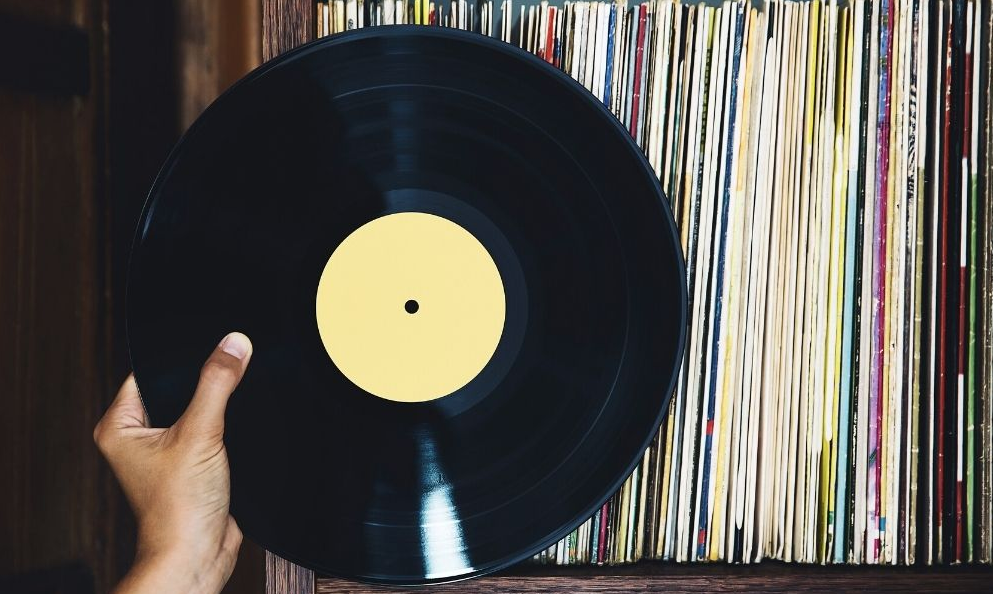
When Were Vinyl Records Invented?
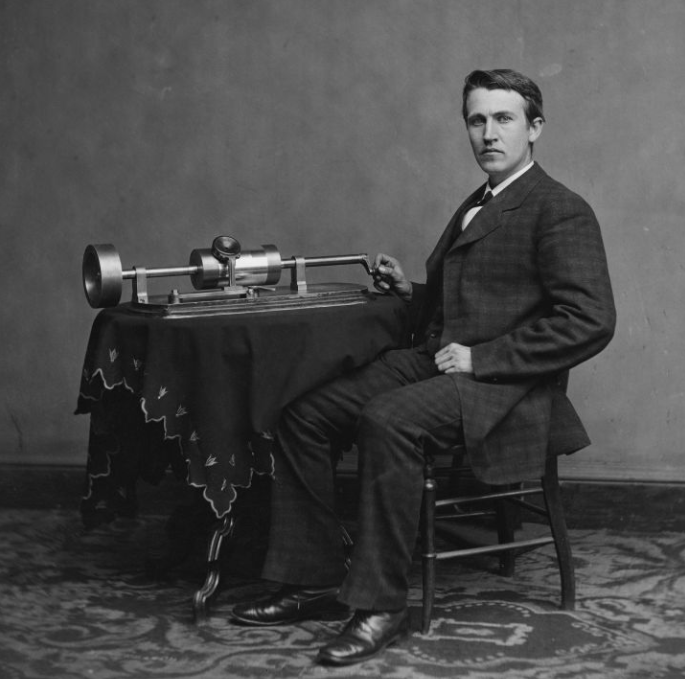
If you mean the modern vinyl LP, the key date is 1948. If you mean the origins of recorded sound, the story begins earlier, with Thomas Edison's phonograph in 1877 and Emile Berliner's gramophone work in the late 1880s. No single invention accounts for the entire history of the record.
A Brief Timeline of Record History
- 1877: Edison develops the phonograph, using a cylinder to record and reproduce sound.
- Late 1880s: Berliner's gramophone work helps establish the flat-disc approach to recorded sound.
- Early 20th century: Disc records become an important format for home listening.
- 1948: Columbia introduces the 12-inch, 33⅓ RPM microgroove LP.
- 1949: RCA Victor introduces the 45 RPM disc and record changer.
Before Vinyl: The Phonograph and Early Sound Recording
Edison's phonograph made it possible to capture sound and play it back. It was not a tape recorder, and its cylinders were not the flat vinyl records we know today. This distinction separates the beginnings of recorded sound from the later development of vinyl.
Berliner explored a different approach with the gramophone. The Library of Congress dates his gramophone patent to 1887 and notes that a flat disc soon replaced the cylinder in his design. That change helped establish the disc as a central format in recorded music.
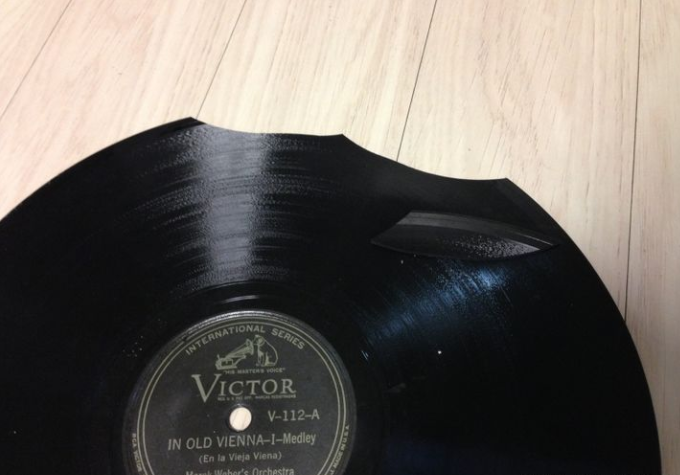
The 78 RPM Era: Records Before the Modern LP
Before LPs and 45s, 78 RPM discs were a major record format. Many vintage 78s are made from shellac rather than vinyl. An old record is therefore not automatically a vinyl record, even if its shape looks familiar.
This matters if you discover records in a family collection or at a thrift store. Identify the format before playing it. The required speed and stylus matter, and a modern LP setup should not be assumed suitable for an older 78.
1948: How the Vinyl LP Changed Album Listening
In June 1948, Columbia introduced its long-playing microgroove record. The 12-inch disc rotated at 33⅓ revolutions per minute and held about 23 minutes of music per side, according to the Library of Congress.
Longer playing time meant fewer interruptions and record changes. The LP helped establish the full-length album as a central listening format. It did not invent the word “album,” but it changed how a collection of music could be experienced on a record.
That appeal remains easy to understand: choose an album, follow the track sequence, and give the music your attention for an entire side.
1949: The Rise of the 45 RPM Single
RCA Victor introduced its 45 RPM disc in 1949. While the LP became closely associated with full-length albums, the 45 became closely associated with singles.
A useful distinction for new collectors: a 45 is not automatically an EP. “45 RPM” describes playback speed. “EP,” short for extended play, describes a release format. They answer different questions about a record.
LP vs EP vs Single: What Is the Difference?
LP: Short for long-playing record, commonly associated with a full-length album. The 12-inch, 33⅓ RPM album is a familiar example.
EP: Short for extended play, generally a release between a single and a full-length album. The term does not specify one universal playback speed.
Single: A release centered on an individual song, often with another track on the reverse. A familiar example is the 7-inch, 45 RPM single.
RPM: Revolutions per minute, or how quickly the record turns. Check the label or packaging for the correct speed rather than guessing from size alone.
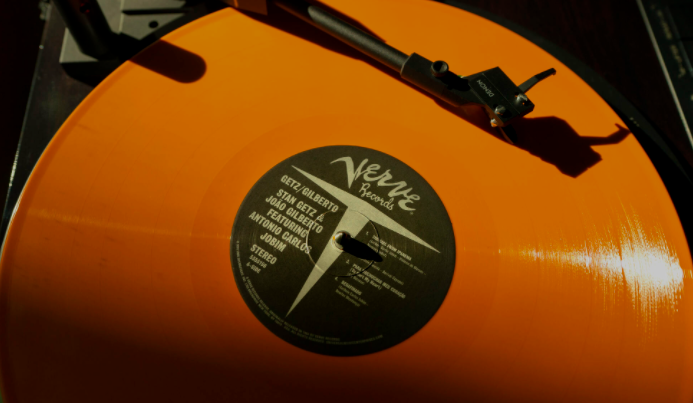
Why Listen to Vinyl in a Streaming World?
Streaming is convenient. Playing a record offers a different ritual: taking an album from its sleeve, looking through the artwork and credits, and hearing a side from beginning to end.
You do not have to choose one format exclusively. Streaming can introduce you to an artist, while a record gives a favorite album a physical place in your home. For a first-time collector, that is a more useful starting point than assuming vinyl always sounds better. The recording, pressing, record condition, and playback setup all affect what you hear.
Frequently Asked Questions About Vinyl Record History
Who invented vinyl records?
There is no single inventor behind the entire story. Edison contributed the phonograph, Berliner helped develop flat-disc recording, and Columbia introduced the modern microgroove LP in 1948. These were separate milestones in recording and playing back sound.
What year did LP records come out?
Columbia introduced the 12-inch, 33⅓ RPM microgroove LP in June 1948. It offered about 23 minutes of music per side.
Are 78 RPM records made of vinyl?
Many vintage 78 RPM records are shellac rather than vinyl. Identify the individual record and its playback requirements before putting it on a turntable.
What is the difference between 33⅓ and 45 RPM?
They are rotational speeds. LP albums commonly play at 33⅓ RPM, while 45 RPM is closely associated with singles. Exceptions exist, so follow the speed printed on the record or sleeve.
Can a modern record player play vintage records?
Check both the record's requirements and the player's specifications. For older 78s, confirm the appropriate stylus as well as the speed. A 78 RPM setting alone does not establish compatibility.
Bring a Little Record History Into Your Home
The most interesting part of record history is that you can still take part in it. Choose an album you love, give it a place in your room, and make time to hear it one side at a time.
If that sounds like your kind of listening, explore https://retrolifeplayer.com/ as a starting point for your setup. Compare supported record speeds and speaker connections with the records you want to play and the way you want to listen. The goal is not to recreate the past perfectly, but to make room for music you want to return to.